
Why learning to say no is one of the most important leadership skills at senior level


There is a strange thing that happens as your career progresses.
You become more experienced, more trusted and more influential.
And yet saying no can become harder.
At senior level, a “no” rarely feels like just a no.
It might mean disappointing the CEO.
Pushing back on a client.
Declining an opportunity that could generate revenue.
Telling your team that their exciting new project cannot happen right now.
Challenging a colleague who has more organisational power than you.
Or admitting that something you previously agreed to no longer makes sense.
So instead, many senior leaders become exceptionally good at making things work.
They squeeze another meeting into the calendar.
Take on another responsibility.
Approve another initiative.
Stay late.
Ask their team to stretch a little further.
And eventually, the organisation becomes very good at doing more.
But not necessarily better.
Every yes has a cost
One of the most useful questions I ask leaders is:
“If you say yes to this, what are you saying no to?”
Because there is no such thing as an unlimited yes.
Every commitment consumes something.
Time.
Attention.
Energy.
People.
Money.
Strategic focus.
And when a senior leader says yes, the organisation often follows.
That makes the ability to say no much more than a personal productivity skill.
It becomes a leadership responsibility.
Why saying no feels so uncomfortable
For many high-performing leaders, saying yes has been part of their success.
They became the person who could be relied upon.
The person who solved problems.
The person who stepped up.
The person who didn’t complain.
That identity can become difficult to let go of.
Because eventually, leadership requires a different question:
“What should I personally be responsible for now?”
Not:
“What am I capable of doing?”
Those are very different questions.
Your ability to do something does not automatically make it the right thing for you to do.
And your ability to make something work does not mean it should exist in the first place.
The most powerful no isn’t always “no”
Senior leaders don’t always need to shut something down.
Sometimes the most effective response is:
“Not now.”
“Not with our current resources.”
“Not unless we stop doing something else.”
“What problem are we actually trying to solve?”
“What would have to change for this to make sense?”
These responses create a conversation rather than a confrontation.
They protect strategic thinking without closing the door unnecessarily.
Try this before your next difficult yes
When you’re asked to take something on, pause.
Don’t answer immediately simply because you know you can.
Ask yourself:
Does this support our priorities?
What will this displace?
Who else needs to be involved?
What happens if we don’t do it?
And perhaps the most important question:
Am I saying yes because it is strategically right — or because saying no feels uncomfortable?
That final question can reveal a lot.
Because sometimes the hardest thing for a successful leader isn’t learning how to achieve more.
It’s learning that they no longer need to prove they can carry everything.
At senior level, leadership is not measured by how many things you can personally absorb.
It is measured by the quality of the choices you make about what matters.
And sometimes, protecting what matters most requires a very courageous word:
No.
To your success,
Isabel
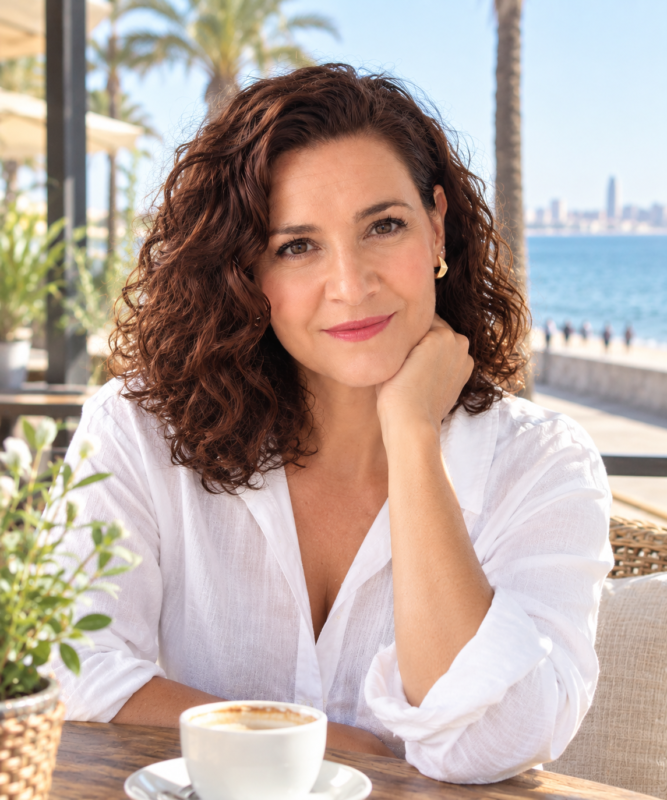
Isabel Valle is a Global Leadership Strategist and ICF Master Certified Coach (MCC) who helps senior leaders and organisations achieve high performance without losing their humanity.
With 25+ years of international leadership experience across Europe, Australia and Asia, Isabel combines strategic thinking, executive coaching and real-world leadership experience to help leaders build stronger leadership, high-performing teams and cultures where people can thrive.
She is the creator of LeadWise™ – Radically Human Leadership, a leadership philosophy grounded in the belief that sustainable performance starts with how we lead ourselves, develop others and shape the environments around us.
A keynote speaker, author and award-winning leadership expert, Isabel works with leaders who don’t simply want to perform better — they want to lead better, and make a lasting impact.