
You Cannot Build Confidence in an Environment That Continually Teaches You Not to Trust Yourself


We often treat confidence as though it exists entirely inside the individual.
If you’re not confident, work on yourself.
Prepare more.
Practise more.
Speak up.
Take more risks.
Believe in yourself.
There is truth in all of this.
But after years of coaching leaders and executives globally, I’ve come to believe there is another question we need to ask:
What if the environment around you is teaching you not to trust yourself?
I was recently working with a senior leader who had been making tremendous progress in her confidence and executive presence.
She was learning to speak more naturally with senior management and global stakeholders. Rather than memorising every word, she was learning to read the room, listen, adapt and trust her own judgement.
Then her boss began increasing the level of control.
Every decision was scrutinised.
Presentations were repeatedly rehearsed.
Long meetings were spent going through exactly what she would say.
Even after she had demonstrated that she was capable, the scrutiny continued.
Eventually, something predictable happened.
She began questioning herself.
Not because her capability had disappeared.
Because her environment was repeatedly sending her a message:
“You can’t quite be trusted to get this right on your own.”
This is where we need to distinguish between high standards and control.
High standards say:
“This matters. Let’s make sure we get it right.”
Control says:
“I need to make sure you do it my way.”
Accountability says:
“You own the outcome.”
Micromanagement says:
“I need to approve every step.”
Support says:
“What do you need from me?”
Interference says:
“Let me take over.”
They can look remarkably similar from the outside.
But they create very different experiences for the person being led.
And over time, that experience matters.
When capable people are repeatedly second-guessed, they can begin over-preparing, seeking unnecessary approval, avoiding risk and questioning decisions they would previously have made confidently.
The irony?
The more control a leader applies in an attempt to prevent mistakes, the less ownership they may create.
So if someone on your team appears to have lost confidence, don’t immediately assume they need another development programme.
Ask yourself:
Have I created enough space for them to trust their own judgement?
Do I allow them to make decisions?
Do I challenge their thinking without undermining their authority?
Do I give feedback without making them question their entire capability?
Do I tell them what needs to change while still making it clear what I trust them to handle?
And perhaps the most important question:
What happens to this person’s confidence after every interaction with me?
Do they leave thinking:
“I can handle this.”
Or:
“I’d better check everything again.”
That question is uncomfortable.
It is also incredibly revealing.
Because confidence isn’t built through encouragement alone.
It is built through experience.
The experience of making a decision.
Learning from it.
Being trusted.
Speaking up.
Being heard.
Taking responsibility.
And discovering:
“I can handle this.”
As leaders, we have an enormous influence on whether people develop that belief—or slowly lose it.
So perhaps the next time you notice someone lacking confidence, don’t immediately ask:
“How can I make them more confident?”
Ask:
“What could I change in the environment so they have more reasons to trust themselves?”
Because sometimes the person doesn’t need fixing.
They need space.
And sometimes the most powerful confidence-building intervention a leader can make is remarkably simple:
Trust them enough to let them lead.
Confidence grows where trust is given.
To your success,
Isabel
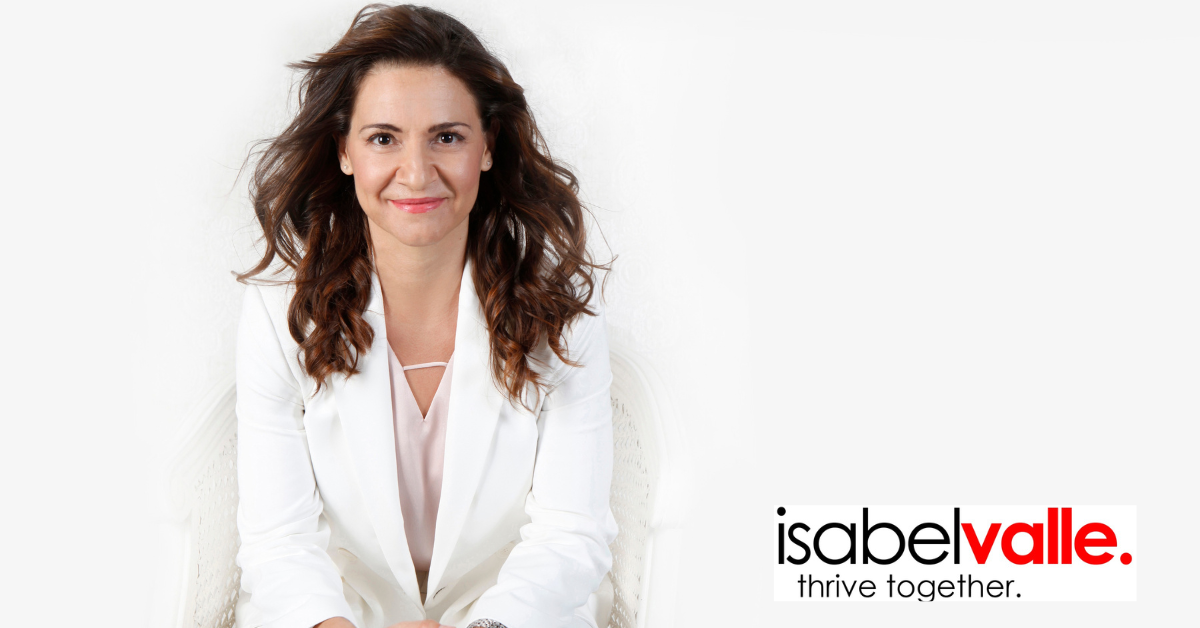
Isabel Valle is a Global Leadership Strategist and ICF Master Certified Coach (MCC) who helps senior leaders and organisations achieve high performance without losing their humanity.
With 25+ years of international leadership experience across Europe, Australia and Asia, Isabel combines strategic thinking, executive coaching and real-world leadership experience to help leaders build stronger leadership, high-performing teams and cultures where people can thrive.
She is the creator of LeadWise™ – Radically Human Leadership, a leadership philosophy grounded in the belief that sustainable performance starts with how we lead ourselves, develop others and shape the environments around us.
A keynote speaker, author and award-winning leadership expert, Isabel works with leaders who don’t simply want to perform better — they want to lead better, and make a lasting impact.