

When You Think You’re Surrounded by Idiots: What If It’s Actually a Leadership Problem?

Let’s be honest.
Most leaders have had the thought.
“How am I supposed to get anything done with these people?”
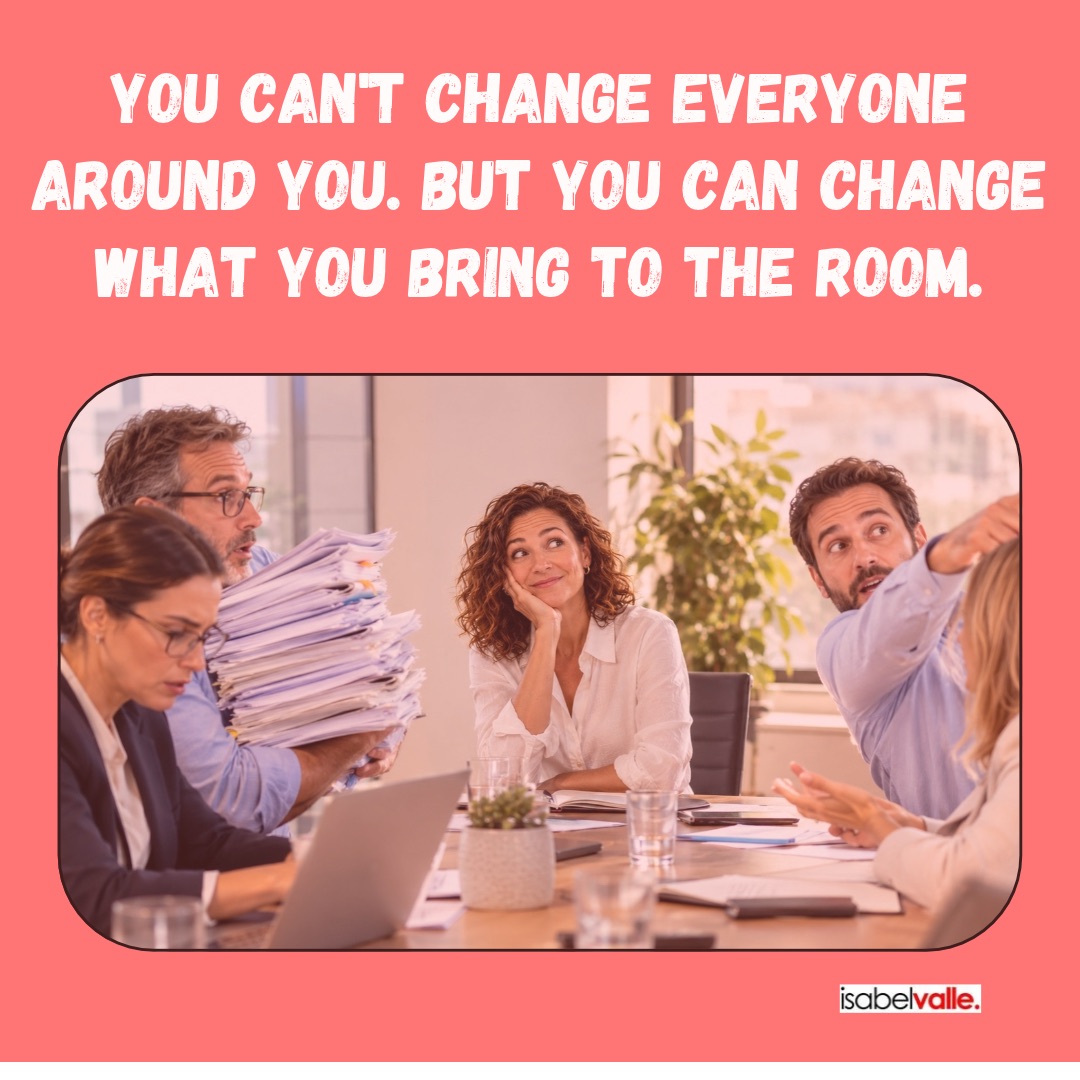
Perhaps someone repeatedly misses deadlines. Someone else makes decisions that seem completely irrational. Another person needs constant reassurance. Someone refuses to embrace change. And someone else appears to have perfected the art of making a simple task unnecessarily complicated.
Eventually, frustration takes over.
“Why can’t they just do their jobs?”
I’ve been there myself.
And after years of working with leaders and teams across different cultures, industries and countries, I’ve learned that this moment can be a very important leadership crossroads.
Because sometimes you really do have a capability or performance problem.
But sometimes you’re looking at a leadership problem through the lens of a people problem.
The distinction matters.
Imagine a leader who constantly corrects their team’s decisions.
People stop making decisions without checking first.
The leader becomes frustrated:
“Why can’t anyone take ownership around here?”
But ownership has quietly been trained out of the system.
Or consider the leader who changes priorities frequently without clearly explaining why.
The team becomes reactive, confused and frustrated.
The leader concludes:
“They’re just not strategic enough.”
Perhaps.
Or perhaps they don’t have the clarity required to be strategic.
Then there is the leader who avoids difficult conversations.
Standards slip.
Poor behaviour continues.
Good performers become frustrated.
Eventually the leader complains:
“Why don’t people take accountability?”
But accountability doesn’t grow very well in an environment where nobody is actually held accountable.
This is why one of the most powerful questions I ask leaders is:
“What are you tolerating, creating or reinforcing that you say you don’t want?”
It isn’t a comfortable question.
It isn’t supposed to be.
Because leadership becomes much more powerful when we stop waiting for everyone else to change before we change something ourselves.
This doesn’t mean taking responsibility for everything.
You aren’t responsible for another person’s attitude, integrity or choices.
You don’t have to excuse poor performance.
You don’t have to tolerate toxic behaviour.
And you certainly don’t have to turn yourself into everyone’s therapist.
But you do have responsibility for your own leadership.
Your expectations.
Your communication.
Your boundaries.
Your responses.
Your willingness to have the conversation you’ve been avoiding.
Your ability to develop people rather than simply complain about their weaknesses.
And your willingness to look in the mirror before pointing across the table.
So the next time you find yourself thinking:
“Why are these people like this?”
Try replacing it with:
“What would I need to do differently if I genuinely wanted this situation to change?”
Maybe the answer is clearer expectations.
Maybe it’s stronger accountability.
Maybe it’s delegation.
Maybe it’s coaching.
Maybe it’s a difficult conversation.
Maybe it’s finally admitting that someone isn’t the right person for the role.
And sometimes the answer will simply be:
“Nothing. I’ve done my part. Now they need to do theirs.”
That’s leadership maturity too.
The goal isn’t to become responsible for everyone.
The goal is to become responsible for your influence.
Because you cannot control every person around you.
But you can influence the environment they work in.
You can raise the standard.
You can change the conversation.
You can model the behaviour.
You can stop rescuing.
You can start challenging.
You can create clarity.
You can make accountability normal.
And you can become part of the change you keep waiting for.
So perhaps don’t ask:
“Why am I surrounded by idiots?”
Ask something much more powerful:
“What kind of leadership would make this team better?”
Then start there.
To your success,
Isabel

Isabel Valle is a Global Leadership Strategist and ICF Master Certified Coach (MCC) who helps senior leaders and organisations achieve high performance without losing their humanity.
With 25+ years of international leadership experience across Europe, Australia and Asia, Isabel combines strategic thinking, executive coaching and real-world leadership experience to help leaders build stronger leadership, high-performing teams and cultures where people can thrive.
She is the creator of LeadWise™ – Radically Human Leadership, a leadership philosophy grounded in the belief that sustainable performance starts with how we lead ourselves, develop others and shape the environments around us.
A keynote speaker, author and award-winning leadership expert, Isabel works with leaders who don’t simply want to perform better — they want to lead better, and make a lasting impact.